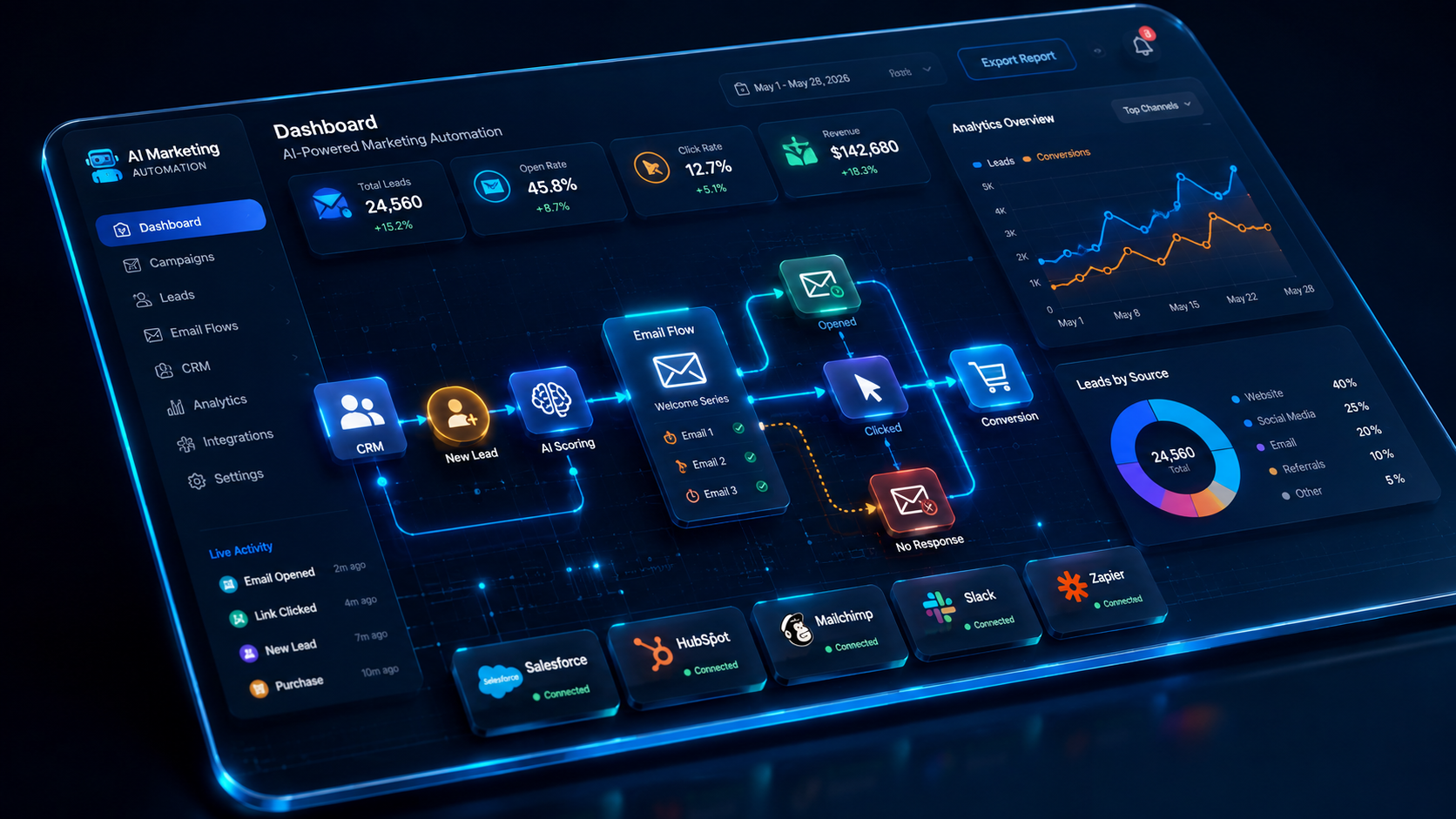
Selecting the best AI marketing automation tools is critical for modern operations teams aiming to scale acquisition without inflating budgets. After testing over a dozen SaaS platforms with our team last quarter, traditional manual campaign setups proved far too costly. Today, leveraging the best AI marketing automation tools allows companies to handle real-time lead qualification, predictive email nurturing, and cross-platform workflows effortlessly.
Here is our practical breakdown of the top platforms in 2026, evaluated by real-world workflow efficiency, integration depth, and actual return on investment.
Comparison of the Best AI Marketing Automation Tools
| Platform | Primary Specialty | Key Target | Standout Feature |
| HubSpot Breeze | All-in-One CRM & Inbound Marketing | Mid-to-Enterprise B2B | End-to-end predictive lead scoring & CRM sync |
| ActiveCampaign | Email & Customer Journey Automation | E-commerce & SMBs | AI predictive sending & personalized workflows |
| Zapier Central | Workflow & App Integration | Operations & Agencies | Autonomous AI bots crossing 7,000+ app APIs |
| Jasper AI | Enterprise Content Engine | Content & Brand Teams | Brand voice-trained AI copy generation |
| Albert.ai | Autonomous Digital Ad Optimization | Enterprise Performance Marketers | Self-learning cross-channel ad allocation |
1. HubSpot Breeze AI: Complete Enterprise Automation
When evaluating the best AI marketing automation tools for enterprise scalability, HubSpot Breeze stands out. It integrates generative AI across sales, marketing, and customer service workflows natively within the HubSpot CRM ecosystem.
- Content Hub Automation: Generate SEO-optimized blog posts, landing pages, and social copy tailored to buyer personas.
- Predictive Lead Scoring: Automatically identify high-intent prospects using machine learning based on web behavior.
- Automated Buyer Journeys: Trigger dynamic email sequences based on real-time user engagement.
- Best For: Mid-market to enterprise B2B companies looking for a unified CRM and marketing engine.
- Official Website: Visit HubSpot Breeze Official Site
2. ActiveCampaign: AI-Driven Email Nurturing
Ranked among the best AI marketing automation tools for lifecycle marketing, ActiveCampaign combines deep automation with advanced email deliverability, using artificial intelligence to optimize every customer touchpoint.
- Predictive Sending: Delivers emails at the exact moment each subscriber is most likely to open them.
- Dynamic Content Personalization: Swap entire content blocks and product offers based on individual user interests.
- Win-Probability Metrics: Forecasts deal closures to help sales teams prioritize high-value outreach.
- Best For: B2B service providers and digital agencies aiming to maximize email marketing ROI.
- Official Website: Visit ActiveCampaign Official Site
3. Zapier Central: AI Agents for Cross-Platform Workflows
Zapier Central takes IPaaS to the next level by allowing users to create custom AI agents that execute complex cross-platform tasks autonomously.
- 7,000+ App Integrations: Connect Slack, Gmail, Salesforce, Notion, and Google Sheets without custom code.
- Behavioral Triggers: Direct your AI bot to take specific actions when data changes in your CRM or web forms.
- Natural Language Setup: Build automated workflows simply by describing goals in plain English.
- Best For: Lean marketing operations teams seeking full workflow automation across disparate tools.
- Official Website: Visit Zapier Central Official Site
4. Jasper AI: Scalable Enterprise Content Engine
Jasper focuses on solving the content bottleneck for B2B brands by producing on-brand marketing assets across multiple channels while maintaining strict stylistic guidelines.
- Brand Voice Knowledge Base: Upload style guides and product specs to keep outputs consistent.
- Integrated SEO Mode: Partnered with SurferSEO to optimize written content for search rankings directly inside the editor.
- Campaign Acceleration: Turn a single marketing brief into blog posts, emails, and LinkedIn ads in one click.
- Best For: Lean marketing operations teams seeking full workflow automation across disparate tools.
- Official Website: Visit Jasper AI Official Site
5. Albert.ai: Autonomous Digital Ad Optimization
As one of the best AI marketing automation tools for performance advertisers, Albert operates as a self-learning digital media planner that continuously optimizes enterprise advertising budgets across Search, Social, and Display channels.
- Cross-Channel Budget Allocation: Automatically shifts spend toward the highest-performing channels in real time.
- Micro-Audience Targeting: Identifies unexpected niche buyer segments based on conversion behavior.
- Autonomous Bidding Adjustments: Executes thousands of daily bid modifications to maintain targeted Customer Acquisition Costs (CAC).
- Best For: Performance marketers managing mid-to-large scale paid ad operations.
- Official Website: Visit Albert.ai Official Site
Key Best Practices for Implementing the Best AI Marketing Automation Tools
To maximize return on investment when adopting the best AI marketing automation tools, consider these essential practices:
- Clean Your Data First: AI models require structured CRM data. Ensure duplicate contacts and invalid emails are purged before launching automated sequences.
- Maintain Human Oversight: Always perform human-in-the-loop (HITL) reviews on AI-generated communications for high-value prospects.
- Focus on First-Party Data: Build direct opt-in funnels rather than relying on third-party data tracking for long-term sustainability.
Frequently Asked Questions (FAQ)
Q1: What is the estimated ROI of implementing AI marketing software?
According to recent industry benchmarks (Source: Salesforce State of Marketing Report), enterprise teams implementing targeted AI automation see an average 14–20% reduction in operating overhead and a significant boost in pipeline speed within 12 months.
Q2: Will AI marketing software replace human marketers?
No. AI software executes data processing and repetitive execution at scale, but strategic brand positioning, creative direction, and high-stakes client relationships still require dedicated human expertise.